Interviews
"Les 101 visages d'Ozymandias"-Radio-Play RTS-interview by Michel Masserey (in French) 2021
Videos
Reviews
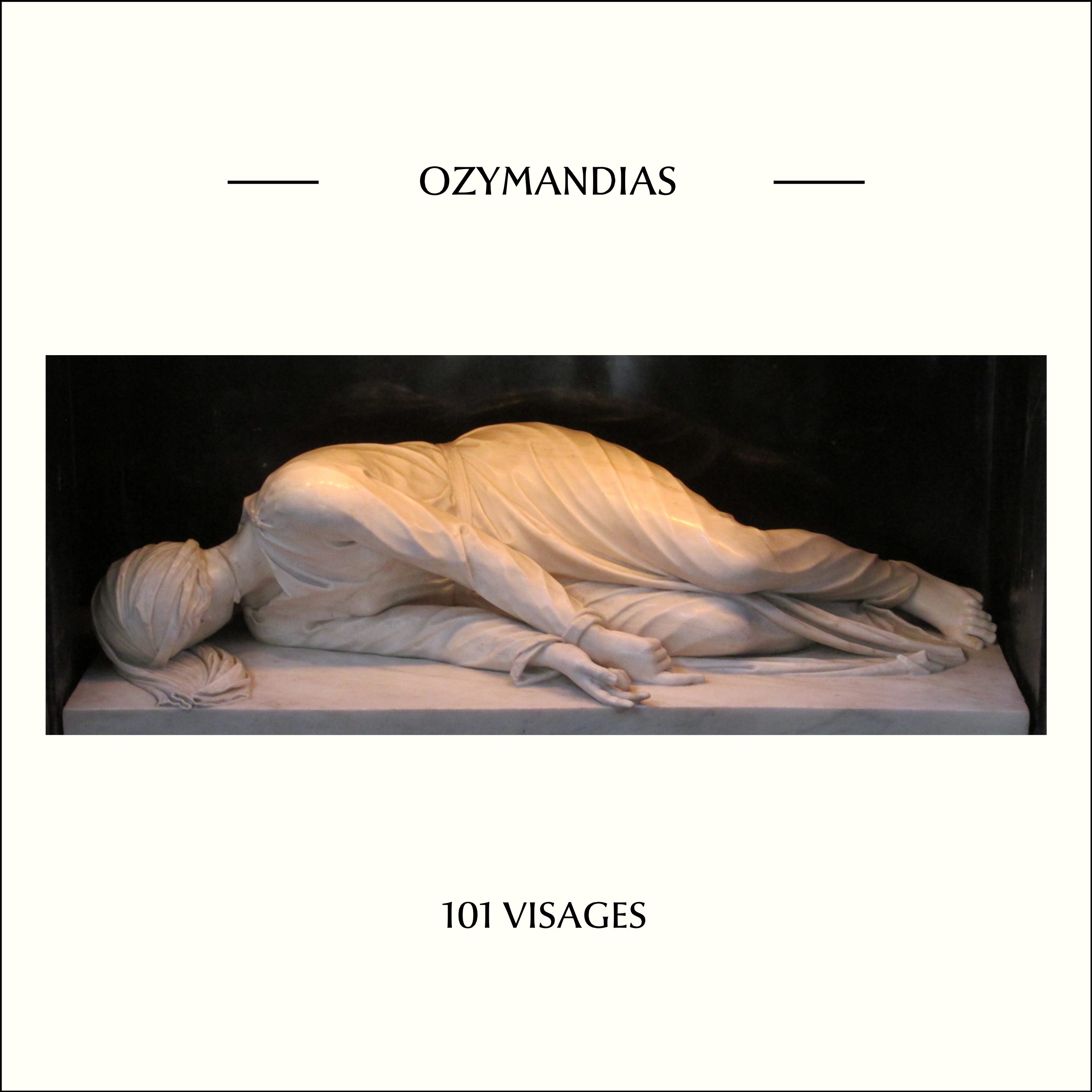
"101 VISAGES" (2020)
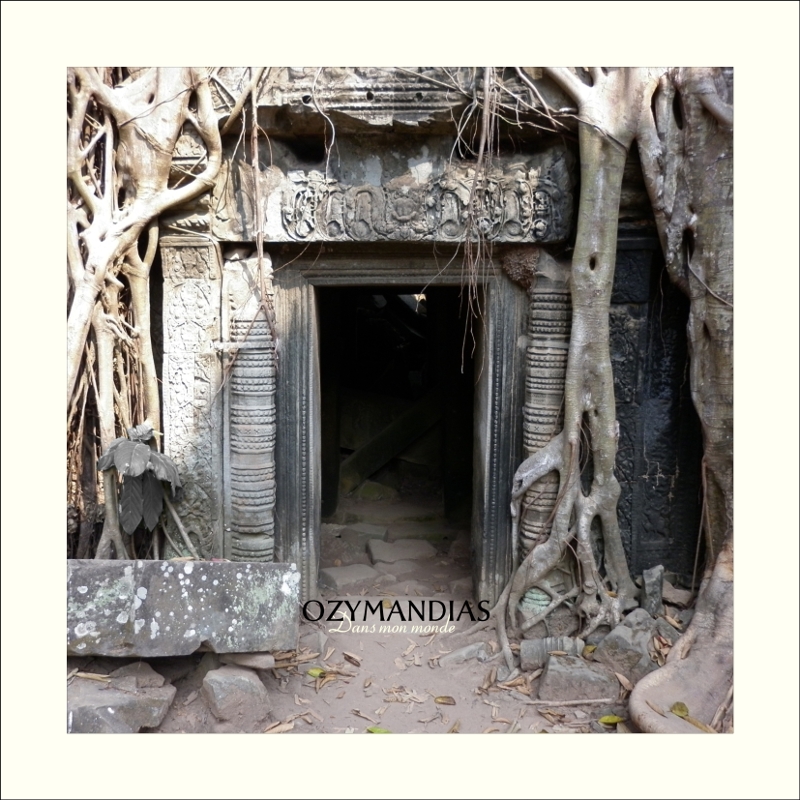
"DANS MON MONDE" (2017)
Hello again,
fellow travelers, we’re on his road once more.
What road is this, you ask? One which has for many many years now taken
us to places of stark contrasts and devastating beauty. Against a
continual background of silence, Christophe Terrettaz has composed his
pieces with only one perceptible destination in mind: that of his
listeners.
When an
artist has been at it this long and has such a
singular focus it would be easy to fall back on past achievements or
even begin the inevitable, terminal cycle of back catalog niche
exploitation; this is one who actually keeps his work in print, having
no desire to try re-creating eras or moods he’s already exhaustively
explored. Unlike so much of the underground we have an individual who
has the ability to bring forth new works which not only continue his
legacy but also over time become expansive universes of their own
wherein those who listen become part of the proceedings.
‘Dans Mon
Monde’ (In My World) drives this point home quite
thoroughly, with his stately arrangements being par for the course.
We’re taken across immense distances in time; the twin constants of
memory and desire make their presence felt as they have so many times
in what he’s put out. The key difference is in the way he’s playing.
There’s much more melody being presented on this record, with the
sometimes errant notes he likes to throw in having been replaced by
tangential explorations culled from random scales performed in keys
which seem to be more than content to upend everything without any
explanation.
Ozymandias
are a very tactile experience, no vocals are
present (he has two collaborations for those who want them). One has
nothing to guide them except the pieces themselves. I still am not
entirely sure what it is that he’s doing at his piano after all this
time. Is he chronicling life experiences? Are the records he gives us
the full picture or are they mere snippets of a range far grander than
one’s grey matter can take in. Or is it a matter of literal
interpretation? Is he merely breathing life into every facet of
Shelley’s enigmatic poem.
I’ve never
encountered another fan of his music, even after
two decades and yet they’re out there. I suspect we play these releases
and in the midst of his grandiose, yet strangely minimal compositions
we sense he’s communicating in the only way he can. These entries he
makes are little more than breadcrumbs to lure us further away from
where we feel safe; farther and farther into the unknown we’re drawn,
listen long enough and you’ll let go of it all.
I’ve covered
him twice before and each time the mystery only
deepens.
By
Peter Marks
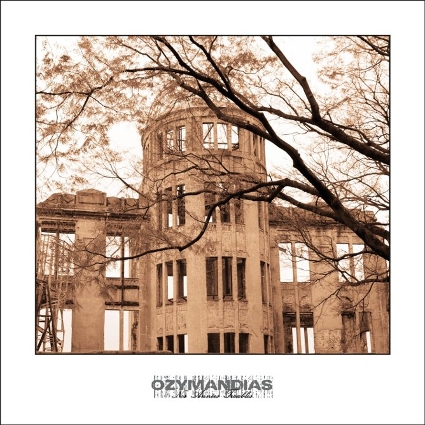
"NOS ANNEES TROUBLES" (2014)
Two or
maybe three times a year – regardless of whether he has anything new
out – I shut out the world and listen to Ozymandias’ complete catalog.
I was about due to do so again so it was a pleasant surprise to get
this from him. For nearly two decades now Christophe Terrettaz has
utilized just a piano to chronicle this thing we call life; it is a
great gift and a terrible responsibility I imagine. I used to wonder
how he did it but I’m fairly certain that wherever he lives in
Switzerland there is a room, a place where all his works have been
organized and stored. You don’t just sit down and improvise these kinds
of pieces. Every note is plotted out, each bar of music painstakingly
arranged and then on top of it all you have to play it flawlessly.
Ozymandias
over time has become more and more proficiently dexterous in his
playing, coupling the circular flourishes of the right hand to the
remarkable chord structures he creates with his left. Sometimes he’ll
place the high end in the left channel and the low end in the other, so
never think that this one does anything strictly by the book. I know
it’s tempting to assume so but don’t. It all sounds so pretty on the
surface but pick away at it a bit and you start to hear and more
importantly feel where he was at when he performed these. If you’re
really feeling daring, play along with him. He’s thousands of miles
from where I live but the message comes through loud and clear.
‘Nos
Annees Troubles’, which translates as ‘Our Troubled Years’ is a record
which balances both sadness with the events which shape our world
against an indomitable desire to never see such things happen again.
There’s no denying that the last decade has been one of the worst in
recent history and Ozymandias have been paying attention to it closely.
Though you can sort out the more obvious references through song titles
like “Fukushima” many of the rest are a bit more ambiguous. “I Miss
You” could be directed at anyone and while some would lay claim to “The
Bloody Dress” there’s no definitive statement being made there either.
People
draw that line in their own way and this is his, at his piano coaxing
out incredible beauty to document it all.
Don’t be
too alarmed, his love of writing waltzes is still there. That three
note basis is a favorite and he plays it better than anyone else I’ve
heard. I will not belabor the point that his fan base is small. We’re a
loyal bunch, most of us have probably been there from the beginning of
his career; silently and solemnly all across this planet we do the same
thing when he releases something: we pause in our lives to take it in
and express gratitude for the gift we’ve been given. Terrettaz is a
humble musician, he’s also notoriously reclusive. You could count his
live appearances on one hand; if I had the means I’d see to it that his
works were pressed on the highest quality vinyl out there and then
issued in a sturdy box set upon which a few words had been placed.
“My name
is Ozymandias, king of kings: look on my works, Ye mighty, and despair”
The
sands of time may erase the majesty but in no way do they diminish the
legacy. For having now done eleven albums, Ozymandias are no worse for
wear from it. It isn’t just a case of simple scales and progressions
from him, these records are part of a body of work known by few but
eventually felt by all. You can’t not be impressed by the sheer
determination nor can one ignore the stunning elegance.
By Peter
Marks
"ANTIPODES" (2012)
Supposing
you prefer more bombast, perhaps you like it bright and stately. He
does that as well, with a minimum of fuss and precisely chosen notes.
In the past he's had themes to his work, and Antipodes is no exception.
How often have you ever gotten a geography lesson mixed into what you
listen to? I'll answer that, rarely. But it is more than just the
definition of this word which Ozymandias are gently playing with, I
suspect he's drawing parallels between the nature of our locations in
their physical sense and the vast gulfs of differences this world of
ours is so expert at delineating. Look to your left, look to your
right, walk around outside long enough and this pattern of
fragmentation will become abundantly clear. It happens everyday but
we're too absorbed in ourselves to notice how happily, almost giddily,
we push others away. It is said that one cannot pass through one's life
unaffected by the influences of others but we still try, as mentioned
before when I reviewed ANBB's album: our goal is to be an island unto
ourselves.
I should
not overlook the main facet which underlines and defines what he does:
romanticism. Ozymandias are a purely gorgeous escape from the dreary,
mundane business of everyday life. To hear his music is to be swept up
to a splendid vista and then abandoned; be mindful of your
surroundings, its a long way back down if you should fall. In the
silent moments where your eyes levelly meet those of the one you love,
music such as this becomes the underpinning; the electrified emotional
resonance you feel when she holds your hand and says nothing. No words
could ever encapsulate these kinds of sentiments properly but this is
the arena of human interaction my favorite pianist operates within.
Perhaps he doesn't see what he does as having such importance, you
could count his live appearances on one hand, but I do. It may sound
like just random instrumental mutterings to most but for as long as
I've listened to Ozymandias he has never let me down.
Yes, at
times his tunes are dark and somewhat perplexing but I have the utmost
respect for the tenacity and longevity of his project. If he were to
just stop, who would take his place, can you think of ANYONE working in
the modern age who does what he does. Sit down at a piano sometime and
try it for yourself, chose your options from the three pedals beneath
your feet and then attempt to play through your own thoughts as the
ivories dance upon your fingers. The dexterity alone that this man
possesses is lethal, his hands caress the keys and suavely coax out
these majestic compositions. As hard as I try to summon up the nerve to
focus all my creativity cataloging Antipodes, I know I'm coming up
short. I suppose that's the point, the hidden agenda as it were that
has been unwinding for nearly fifteen years now as I sit alone and seek
to encapsulate how these records have affected me. I'll continue with
my efforts just as surely as he will with his, the difference being
that his legacy will assuredly be remembered even if so few know of
him. Ozymandias have been a quiet companion I have long kept to myself
and I hope he won't mind me introducing a few others to his elegant
sound.
By Peter
Marks
"A
PARADISE INHABITED BY DEVILS" with Kelli Ali (2010)
Gothic
pianist Ozymandias certainly knows how to impose a spine-shivering
spell on everyone, captivating souls in subtle emotional reflections,
which seep through his fingers straight into the keys, revealing an
intoxicating presence from the heart. His natural sonic-beauty warms a
hellish world, surrounded by thought-provoking horror, harking back to
an all too often forgotten, classical era.
And it should've
seemed obvious that the Swiss pianist, also known as Christophe
Terrettaz, would invite genre experimentalist Kelli Ali to collaborate
on his new album, with her eerily sweet vocals settling in between
Christophe's breathtaking expressions, weaving together the fabrics of
an enchanting darkness, as though they were born together.
Best known for her
hit single 6 Underground with the Sneaker Pimps, Kelli's solo career
has basked in the essences of post-trip-hop, pop, folk and post-punk,
something that her maverick nature has always hit spot on, no matter
what genre she aims for. And this couldn't be anymore true on A
Paradise Inhabited by Devils, as Kelli's vocals adapt into a whole new
angelic depth, forwarding on from her traditional folk album The
Rocking Horse, which saw Kelli's spiritual presence released through
alluring harmonics.
Combined with
Ozymandias, the scenes for a black & white expressionism soundtrack
were set in place, haunting the album through Mary Shelley-inspired
nightmares.
The opening track
Dark Mirror immediately hits a sombre emotion-chord, mournfully
expressing the foundations of an ethereal tale, through Elizabeth
Frazer-esque vocals from Kelli, who crosses Ozymandias slow-deathly
mesmerics with heavenly illusions. Imagine a ghostly white dress,
floating down the stairs, and you'll almost feel the phantom possession
coldness passing through you.
Following on, the
gentle Le Voyage De Vernon breathes a frost onto the backs of necks,
making every hair stand up and resurrecting a modern-day Clara Rockmore
& Nadia Reisenberg as though the pioneering theremin/piano duo had
taken over Kelli and Christophe in one last unearthly performance.
And the theremin
likeness grows from strength to strength, with vocally
instrumental-vibrato, widening in pitch range like a choir of
etherwaves in sorrowed entities. This especially rings true on Only the
Sun, which leaves most listeners fighting back the tears, formed by
Kelli's bittersweet lyrical affections, held together with Ozymandias'
dramatical/tragic piano intensities.
But it is The Death
of Despina that grips hold of anxious fans, bereaving them into
overwhelming shoegaze and Harold Budd-inspired elevations, raising a
pale fright to build-up through minimalism-fear of silence. Perhaps the
creepiest yet passion-fuelled track to appear on the album, it numbs
those who become engulfed into the depths.
Fluttering with
elegance and terror, A Paradise Inhabited by Devils brings out a whole
new, gothic side to Kelli, allowing her to flourish in creativity and
exhume a talent that all too often goes undetected. Turn off the lights
and burn some candles. Forget the séance, as you might just see a few
shadows, moving to Kelli's resurrecting vocals.
Ross
Cotton
Inspiré des écrits
ombrageux et
horrifiants d'une
certaine Mary Shelley, A Paradise
inhabited by devils offre une
collection de titres mus par un piano au lyrisme minimal
(responsable : Ozymandias, identité de façade en art pour Christophe
Terrettaz) et la voix fragile et enveloppante de l'ex-chanteuse de
Sneaker Pimps, Kelli Ali, visitant aujourd'hui un couloir solo.
À
l'instar de ce qu'Ozymandias a su donner sur ses oeuvres précédentes,
la tonalité en clair obscure fait ici bel effet:les atmosphères ne
tombent pas dans l'horrifiant cliché gothique auquel se prête
l'illustration des oeuvres de Shelley. Kelli et Christophe prennent
soin, au contraire, de rester dans un feutre dont l'enveloppe cache,
dérange:Evocation démoniaque ("Dark Mirror"), spleen
persistant("Constantine and Euphrasia", "Mercy and
Sorrow"). À partir de peu de choses, les deux protagonistes
engendre un espace précieux, fragile et en proie à la tourmente,
sans jamais tomber dans la déclamation et la gratuité. Disponible
uniquement en téléchargement depuis les plateformes légales
usuelles (dans des formats garantissant une bonne qualité de rendu),
cette oeuvre commune est un moment suggestif et sensible. Isolement
prescrit, recueillement offert.
Emmanuël
Hennequin 80%
The Mike Davis column November
/ December 2010
Erstwhile
Birmingham born Sneaker Pimps singer KELLI ALI has long put her
former band behind her with a series of intoxicating solo albums,
exploring summery r&b beats on Tigermouth, chill out electronica
and brooding rock with Psychic Cat and the Goldfrapp goes Renaissance
textures of Rocking Horse while last year saw the release of
Butterfly, an acoustic, folky rework of Rocking Horse.
Having worked with
such names as Bootsy Collins, Marc Almond and Shutter Island composer
Max Richter, she can be relied on for some interesting collaborations.
Her latest album, A Paradise Inhabited By Devils, is no exception. Last
year she was invited by neo-classical Swiss pianist and composer
Christophe Terrettaz, better known as Ozymandias (named from Percy
Shelley’s poem), to collaborate with him on an album inspired by the
short stories of Shelley’s gothic horror writer wife, Mary, the author
of Frankenstein.
The album title comes
from her description of Naples following mystery shrouded events
involving her husband registering a child as his wife’s when she wasn’t
in fact the mother (the phrase was also used by Jennifer Selwyn for her
book about the Jesuits mission in early modern Naples), but it’s a
fitting image for the macabre stories she published regularly in The
Liberal and The Keepsake.
Nothing Ali’s done
before quite prepares you for this, her first attempt at a strictly
classic vocal style with music and simple voice and piano arrangements
that share a kindred artistic vision with the likes of Phillip
Glass, Steve Reich and Michael Nyman. At times bordering on operatic,
at others leaning towards lieder songs and arias or tinted with
Gregorian plainsong, it’s a heady collection that perfectly evokes the
gothic and poetic atmospherics of Shelley’s writings.
Dark Mirror opens
proceedings with Ali’s soaring voice conjuring images of vespers in a
haunted medieval monastery before the arrival of multi-tracked jabbing
choral backing evokes the work of Carl Orff. The
instrumental Despina, Despina’s Prayer To The Stars and The Death Of
Despina are all inspired by Shelley’s first published short story,
1822’s The Death Of Despina while Transformation (imagine a gothic
Enya) refers to, well, the 1830 Transformation actually and,
reflecting the tale’s melancholic theme of loss Maurice is inspired by
her 1820 children’s story of the same name.
The sombre, hushed
and almost whispered lament Constantine And Euphrasia clearly relates
to Euphrasia A Tale of Greece while, departing from the short stories
and sounding like a soundtrack to some 50s French noir romance, closing
piano instrumental Elizabeth and Victor is drawn from Frankenstein, but
the sources of others are less obvious. The five minute melancholy of
Only The Sun refers to a moment in Euphrasia while Dark Mirror is a
telling phrase in Frankenstein.
Much
of this I only uncovered by trawling the net, and I still have no
idea upon what Le Voyage De Vernon or the brooding vocalese of Mercy
And Sorrow are based. But you don’t have to know the first thing about
Shelley or her writings to appreciate the album. Though a liking for
dark, brooding minimalist classical music might be a help.
Wears
The Trousers magazine
Kelli
Ali has made a career of dramatic left turns, flitting from one musical
incarnation to another, but in the past few years her chameleonic
tendencies have morphed into a sensually fluid, natural and logical
transition. The folk-kissed reinvention of 2008’s Max Richter-produced
Rocking Horse felt as distant from her days as the face and voice of
’90s trip-hop darlings Sneaker Pimps as it was possible to go, but
tenderly found Ali finally claiming a sound for her own. Her subsequent
output has been a finely-tuned affair, and largely done off her own
back. Last year she self-released Butterfly, a follow-up and
counterpart to Rocking Horse, which reimagined that album with a rawer,
acoustic interpretation with startling results.
In keeping
with her habit of working with all sorts of collaborators, in 2009 Ali
was invited by celebrated neoclassical pianist and composer Christophe
Terrettaz (aka Ozymandias) to join him in Switzerland with a view to
working on an album together. Before long the pair found a mutual
passion in the darkly opulent literary world of Mary Shelley, and
following several sessions between London and Switzerland, this
haunting collection was eventually completed, with Ali handling the
lyrics and vocals and Terrettaz manning the piano and writing the music.
Sneaking
out via Bandcamp earlier this month, the aptly titled A Paradise
Inhabited By Devils – a term Shelley once apparently used to describe
the city of Naples – offers eleven chilling piano-and-vocal
compositions that give Ali the space to turn her tender, crystalline
purr into a choral panorama of richly textured proportions. Opener
‘Dark Mirror’ instantly sets the uneasy tone, building and falling
firmly, though never imposingly, around Ali’s lyrics as they veer back
and forth between choral, delicate English and eerie Latin chanting,
allowing all elements their moment in the spotlight.
Spotlight
though, is perhaps the wrong word to use here. Though every track tells
its unique story, the album as a whole screams to be listened to in one
sitting, around a candle as the wind howls and rain pours outside. The
constancy in its formula allows both Terrettaz and Ali to weave around
each other, never treading on each other’s toes and never letting the
atmosphere wane for a moment. ‘Mercy & Sorrow’ and ‘Maurice’,
perhaps the most delicate pieces in the collection, may only features
Ali improvising quietly and wordlessly in the background but her
presence is never outshone. Terrettaz takes the reins on the
instrumental pieces ‘Despina’ and ‘Elisabeth & Victor’, but never
abuses the opportunity to exert his presence, adding warm conduits and
resolutions in his solo moments.
Mary
Shelley enthusiasts will find much to cherish among this collection;
Ali and Terrettaz certainly know her catalogue well (fun fact:
‘Ozymandias’ is the title of a sonnet by Shelley’s husband Percy). The
obvious surface references aside (see the powerful, almost witchy
chanting on ‘The Death Of Despina’), Ali has dug deeper to give
voiceless characters from Shelley’s various works a chance to make
their presence known and respectfully live outside of the author’s
dark, Gothic pages. Those less familiar with Shelley’s works needn’t
worry, though, as the cryptic, sparse and often medieval lyrics offer
the listener plenty of scope to interpret them as they see fit.
Penultimate
track ‘Only The Sun’ gallantly gestures Ali to take centre stage for
the first time on the album. Over Terrettaz’s delicate piano work, her
minimal lyric is slowly delivered with one of her most tender
performances to date before Terrettaz’s playing picks up pace and
tension, resulting in a hair-raising finale. ‘Elisabeth & Victor’
then draws the collection to a close, acting almost as an epilogue,
reflecting on what came before it.
In
Terrettaz, Ali has found a musical partner who understands her
subconscious need to evolve by combining the past with the present, and
the pair have channelled that into a simple but rewarding tapestry on
which Ali has been able to spread her wings like never before. Although
the music industry’s (d)evolution has denied this release – for the
time being anyway – a home on a charming dusty old vinyl (where it
ideally belongs) or a luscious leatherbound, velvet-lined digipak CD,
this near-perfect collection combines the ancient with the modern like
neither artist perhaps imagined possible.
Leigh Bartlam
"LES REVES
ORIENTAUX"
(2008)
D-Side
n°49 novembre-décembre 2008
On
attend,
fébrile, chacun de ces
rendez-vous-là. Le piano du Suisse Christophe Terrettaz, acteur
solitaire de ces Rêves orientaux, est un duvet.
Il se déroule en un endroit en lequel on a l'impression que le spleen
dominera.Pas de sang. Il s'agit d'un passage
simplement, la photographie d'un instant de vie que marquent
l'incertitude et le souvenir, un moment où les
questions se poseront parce qu'elles auront l'opportunité et le temps
de le faire.Le piano, toujours dans cette
économie et cette fausse quiétude qui le caractérisent, prend une
photographie mentale du voyage. Voici un paysage
dont les notes fuient doucement, un mouvement subtil qui nous fait
quitter le monde pour sans cesse y revenir.
L'abstraction est une force de Terrettaz, son optique instrumentale
suggérant par nature l'échappée hors
des sentiers de cette histoire qu'on nous raconterait avec des mots.
Son Orient à Iui, source de l'essai,
peut être tout autre chose pour nous : la solitude, le repli, tandis
que ce piano porte aussi en lui quelque chose
d'irréductiblement translucide et lumineux. Cette musique est dans la
dualité du don : elle prend sa source dans
l'histoire de l'auteur, et deviendra notre parce qu'elle veut et peut
l'être. Elle part d'une circonstance mais
ouvre une autre porte, sur nous-mêmes.
Emmanuel Hennequin
Elegy
n°56 novembre-décembre 2008
Il y a
quelques mois, après huit ans
d'absence scénique, le pianiste Christophe Terrettaz a donné deux
concerts à Tokyo. Est-ce que ce sont ces performances qui lui ont donné
envie de composer sur l'Orient?
Quoi qu'il en soit, nous le retrouvons aujourd'hui pour un huitième
album consacré à cet endroit du globe
et à ses paradoxes.
Débutant par la très zen et romantique "Shinjuku" dédiée au quartier du
même nom à Tokyo, Les Rêves
orientaux sont imprégnés de moments voIės, entre onirisme et réalité
(la très délicate "Un Dimanche à Kamakura"
et son ambiance à la Eric Satie), s'opposant à des passages noirs,
d'une violence contenue par la beauté
des notes de piano ("Hiroshima-Nagasaki") ou saturés de mélancolie ("16
ans"). Cet album allie la précision
d'un origami et la douceur des cerisiers en fleurs aux ravages de la
bombe atomique.
Sabine Moreau
"ABSOLUTE"
(2007)
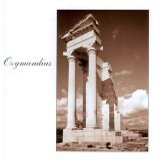
Elegy
n° 49 août-septembre 2007
[
... ] c'est encore une fois audit piano qu'il dédie le septième album
de son projet solo Ozymandias. Nettement moins mélancolique qu'à
l'accoutumée, Absolute est considéré par son auteur comme le pendant de
son précédent opus Les Doutes Eternels dans le sens où il met en
exergue les facettes positives de l'humanité. Ayant bénéficié d'une
masterisation de Jacek Tuschewski et Simon Bowley qui travaillent
notamment avec Lisa Gerrard, ce nouvel Ozymandias est une perfection
néo-classique dans laquelle la moindre note se trouve chargée de sens,
d'émotion, de réminiscence et de célébration.
Sabine
Moreau
D-Side
n°41 juillet-août 2007
Christophe
Terrettaz a changé de
territoires, s'exilant de ceux obscurs de l'âme pour se concentrer, via
le nouvel Absolute, sur les facettes plus positives de la communauté
humaine. Le résultat, pénétré de mélancolie se décline tout le long de
ces onze nouveaux titres exécutés au piano, pourvoyeurs de lumière et
d'intensité. Ensemble uniforme, Absolute offre une suite moins
tourmentée aux Doutes éternels parus en 2004. Il semble faire de
Terrettaz le témoin d'une redécouverte partielle du monde, comme si les
paupières se soulèvent laissaient l'iris en saisir une intensité
inédite Parties minimales exécutées de belle main ("Marina", "Le
Sentier du Plaisir") font alors le menu de ce disque poétique, senti et
charnel, et offrent autant de miroirs que ce que ce nouveau regard
suggère.
Emmanuel
Hennequin
"LES
DOUTES ETERNELS" (2004)
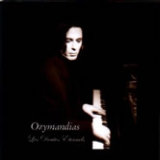
Heimdall
Ozymandias : Les
doutes éternels Three years after
'Layla', Christophe Terrettaz is back with his project Ozymandias with
a new album. He also composed music in 2003 for the soundtrack of the
Japanese film 'Vibrator' from Ryuichi Hiroki, considered by many as the
best Japanese film released this year.
The music
of 'Les Doutes
Eternels' has been inspired by photographs of Edward Sheriff Curtis
(1868 - 1952) at an exhibition. Curtis has been a pionner in
ethnography by taking photographs of the North American Indian, as a
full documentation on their customs and manners. Christophe Terrettaz
composed his music with all the feelings he had while watching these
photographs. Putting them in our present life and environment, he sadly
noticed that, beyond all our hope and faith, nothing changes. This is a
musical approach and a bitter view on humanity, about the disrespect
for the earth and human beings.
Musically
Christophe reached a
higher position, with a very mature approach of composing. A dark and
intense atmosphere for superb neoclassical instrumentals, with this
extraordinary Satie touch that makes Ozymandias compositions
recognizable. A deep and strong work, very personal, that should
establish Christophe's work as one of the most interesting and
brilliant in the neoclassical genre in the last ten years.
A
positively pessimistic work to open our eyes on our tragic condition
and to help us to see the light of hope. Anyway we're warned, as the
last track says : 'Lorsque le soleil ne se lèvera plus'.
Highly
recommended !
Stéphane
F.
"LAYLA"
(2001)
Sonic Seducer
Dies hier ist fernab der üblichen Standards, die gemeinhin den
Weg in meinen CD-Player finden. Töne einer fernen, grauen Welt:
Spröde, bröckelige Klavier-Werke, wie intellektuelle Filmmusik
anmutend, voll unendlichem Grau und der Atmosphäre unentrinnbarer
Vergänglichkeit. Und fopp! – erstarre ich inmitten meines
armseligen Daseins. Hier wird erdrückende Schwermut, wird
unstillbares Weh wahrhaftig in Klangkonstruktionen überführt. Dies
ist Musik, die ohne Umschweife Visionen vor deinem inneren Auge
erstehen läßt, wie Szenen aus einem längst vergessenen
Schwarz-Weiß-Film. Tatsächlich sind es Filme, die Christophe
Terrettaz zu diesem Kleinod stiller Musik inspiriert haben, drei
Filme, die für den Musiker Allegorien der Begriffe Schmerz,
Krankheit, Erlösung darstellen. Es sind die Assoziationen, die
solche Musik auslöst, welche sie unerträglich schön machen. Da
steigt Sehnsucht nach niemals zu erreichenden Horizonten auf.
“Layla” ist fragil, Romantik ohne Kitsch, voll der Schwere des
Irdischen. Mit einem Hauch von Erlösung. Jungs, ich werd’
poetisch.
Paco González
This is the fourth
album (the fifth if we consider the joint
collaboration with Elijah's Mantle titled "The Soul Of Romanticism") of
this one man and one instrument project. A quick glance at previous
releases by Ozymandias takes us back to 1996 where the debut album
"Isolement" was published by the German label Weisser Herbst. This was
followed by "Ahara" (1.998), released through World Serpent (the
label), by the aforementioned collaboration, and finally by the great
predecessor "Karnak" (2000), already under the own label Ramses
records.
The music composed and performed by the Swiss Chistophe
Terrettaz is solely expressed by a classical piano that has taken
inspiration from various sources during its existence, from literature
in general, poetry in particular, to classic architecture.
This new
work comprises thirteen pieces inspired by some independent films and
personal past experiences. Very introspective compositions are included
in the probably most personal album to date. He keeps showing his
personal interior with compositions flooded by enormous sadness,
melancholy and infinite pictures that the listener may see reflected in
inner thoughts. During "Layla" we encounter a slow and nearly mournful
piano inside the grey beauty of "L'âme épurée", if I dare to name a
track among the homogeneous and high levelled thirteen piece album.
Another favourite of mine is the opening, "Rien ne sera jamais plus
comme avant", offering more skilful notes during an entrance of vivid
images that come flowing invading sensations, its ability turns later
to the slow and reflective which are the defining adjectives that fit
the mood created during most of the album. As stated before, the own
past was a source of inspiration for the composer, while of course the
listener can construct blurred memories of a real or imaginative past
from the beautiful and sadness of every note. Again I want to name
another of my favourite numbers, this is the third and have a the name
of "Seul au monde".
Here, Terretaz offers once more one of those pieces
where he really expresses his inner visions at best and go hand in hand
with the style he has propagated during all his discography, pieces
leading to figurative isolation and confinement.
Of course you must be
in the mood to really appreciate more than fourteen minutes of
continued piano compositions of a great elegance and classical appeal.
According to the information we received from the distributor this
compositions are based on concrete moments of several films that
unfortunately I haven't had the chance to view myself, but that I will
name in case you readers have watched them and can put an image to
great titles as another favourite like "Comment l' oublier?", where,
again, in just three minutes, the composer comprises a series of
stimulus enough to reach not frequently visited places of the self.
Those film titles are such as "Un Soir Apres La Guerre" by Rithy Panh,
"Okaeri" a movie by Makoto Shinokazi and a third named "Buffalo 66" by
Vincent Gallo. Each film respectively represent for the composer Pain,
Disease and Redeemer Love, three definitions fitting also with his own
visit to past experiences.
All those titles and words could give an
idea of what can be found in each musical creation. Another thing worth
of mention are the slowness and languid moments of "Le souvenir qui
ronge", showing an exquisite minimalism in terms of notes and
sensations. Also the title track is where the composer have reach one
of the best ever moments in his already long career, it is another
example where he joins in perfection all virtues spread over a big
number of pieces. Not really much words to define such splendid and
brilliant title. I also would like to point out that, in spite of the
offered suggestions for giving a precise scenery to each work, the
possibilities inside the listener mind are endless.
This can be valid
as an example of "Dépression" or "Illusion perdue", two of the most
introspective thoughtful moods of the album. The final masterpiece is
presented under "De Silence et de pleurs" to show again static images
of real expressiveness. Like previous works, "Layla" is another
recommended album by Ozymandias, if you are not really into his music
you could easily start with this or whichever of the previous, a
perfect gift for lovers of classical piano with the characterisations
described above.
F. Paco
González
Cynfeirdd
Ce nouvel
album de Christophe Terrettaz est, explique le communiqué de
presse, dédié au cinéma indépendant qui a influencé sa composition.
Pour ma part je dirais que cela ne regarde que le compositeur pianiste,
son effet sur l'auditeur est seul en compte : beauté, plénitude,
mélancolie, une foule de sentiments se bousculent, s'opposent, se
mêlent. Un disque auquel il faut s'abandonner totalement, bien au-delà
de toutes les productions habituelles, on est là dans un autre domaine,
celui d'un homme seul devant son piano, celui de la grande musique.
"KARNAK"
(2000)
Blog
du pingouin teutonique
Passionné
pour la poésie romantique
anglaise et fasciné par l'Egypte Ancienne, Christophe Terrettaz
pianiste soliste d'Ozymandias (nom tiré d'une oeuvre de Percy Bysshe
Shelley) est un génie de la composition et un véritable virtuose. Son
oeuvre se révèle extrèmement intimiste, caractéristique héritée des
poètes anglais et d'une beauté mélodique dédiée à des splendeurs issues
d'un autre temps. Minimaliste, rappelant par moment Chopin ou Satie, la
musique d'Ozymandias s'adresse directement à votre coeur. A réserver
aux plus romantiques d'entre vous donc.
On
apprèciera aussi
l'album The Soul of Romanticism avec Mark de Elijah's Mantle, celui-ci
récitant des poèmes de Keats, Byron et Shelley dans l'espace musical
créé par Terrettaz. Splendide tout simplement, et bien loin de tous les
styles "musicaux" que les médias nous déversent. Tout cela pour vous
confirmer qu'il est encore possible d'écouter de la bonne musique de
nos jours sans avoir "à faire les fonds de grenier".
Fettgans
D-SIDE
Des albums tels que
"Isolement" ou "Ahara" nous ont permis de nous
familiariser avec le pianiste Christophe Terrettaz et son oeuvre de
soliste au sein de Ozymandias. On le savait inspiré par les poètes
romantiques anglais et on découvre, avec Karnak, fasciné par l'Egypte
Antique. Ce nouvel opus, entièrement composé au piano, nous projette au
coeur des fascinants vestiges du célèbre temple égyptien, chaque
morceau reflétant l'atmosphère d 'une salle particulière de l'édifice.
Ainsi, cheminons-nous à travers "L' Allée des Sphinx", pour rejoindre
la "Chapelle d'Osiris" et le "Sanctuaire d 'Amon". Une superbe échappée
mélodique d'un autre temps.
Yannick
Blay
L'âme
Elétrique
Inspired by the
ancient Egyptian temple of Karnak, Christophe Terrettaz
offers us the latest work by Ozymandias which presents twelve new
musical pieces based -as always- entirely on piano. Haunting, mystical
and intensively romantic, the neo-classical arrangements of Christophe
manage to reflect the mysteries of ancient Egypt in a very emotional
and, simultaneously, artistic way. The warmth and the coldness derived
from remarkable sound of the piano constantly interact with one
another, thus creating a unique feeling not unlike the one that the
dark romantic composers of the 17th and 18th centuries had achieved.
"Temple de l'est", "Premier pylône" and "Chapelle d'Osiris" are the
tracks that I was instantly bewitched by, but of course does not imply
that the rest of the tracks on "Karnak" are any less astonishing. The
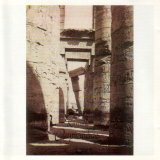
CD is assisted by a beautiful cover featuring a picture of what is
probably the remnants of a gateway in Karnak supported by two lines of
huge massive pylons covered from top to bottom in hieroglyphics. And
perhaps this is the most fitting image to accompany the CD, but it is
certainly not enough to satisfyingly express the power and mystery that
surrounds the temple of Karnak itself or the music that was born by the
wandering mind of Christophe Terrettaz to the glory and magic of an age
long past.
Ioannis K.
"THE SOUL OF
ROMANTICISM" with Elijah's Mantle (1999)
REACTOR
"Les
compositions au piano sont minimalistes et
émotionnelles, Mark scande de sa voix profonde et chaude des poèmes de
Shelley,Byron,Keats,Wordsworth et Coleridge. Un chef d'oeuvre
intimiste, pur et loin des modes cybernétiques du moment. La bande-son
de notre fin de siècle."
Antz
Indaco
Dark
Velvet
Magazine
"Now, this is neat. Ozmandias and Elijah's Mantle have come together to
create an artistic masterpiece featuring Ozmandias on piano and spoken
word by Elijah's Mantle. Literary goths, pay attention, because this
disc will reach down and touch your Romantic core, as the spoken word
is various poetry and prose by Shelley, Keats, Wordsworth, Coleridge
and Byron. The literature is recited with clarity and feeling, which is
enhanced by the piano music that accompanies it. One thing I've always
loved about the piano is that it allows musicians to capture and relate
feelings in a way that electronic instrumentation is never able to do,
and Ozmandias will capture your heart, your soul, and your mind, as a
good pianist should."
Goddess
"AHARA"
(1998)
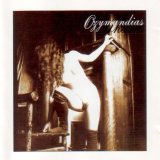
Side-Line
Magazine
"...Ahara
is verry close to a classical
oeuvre , there where it's entirely composed by one single instrument :
the piano. Ahara is a succession of melancholic fragments, which seems
to be taken from a movie ! I think it's not a coincidence I've been
reminded to the outstanding music , Michael Nyman composed for The
Piano . I just miss s kind of kicking melody ! Ahara remains cold and
depressive, but this sad feeling reinforces the splendour of the
creation. The captivating pieces of this cd will completely satisfy the
lovers of soundtracks and classical music. Ozymandias belong to a
wider, but still underground scene. An album to relax and meditate a
brilliant release ! "
Stef
Froidcoeur
Trinity
"...Austère,
minimaliste, la musique de Ozymandias ne cherche jamais à
détourner de l'essentielle émotion ou de l'état d'âme invoqué.
L'inspiration est le maître mot de ce qui guide les compositions,
l'ensemble offrant d'être aux aguets parmi des anges séculaires, des
muses en état d'apesanteur. Nul besoin de chercher chz Eric Satie,
Claude Debussy ou plus près de nous Harold Budd, la musique prodigué
par Ozymandias ne se rapporte qu'à elle-même; autarcique, intimiste et
profondément humaine elle renvoie à l'auditeur des échos de ses propres
sentiments, menant en songe un cortège funeste où les âmes prises au
piège des jeux de l'amour et de la mort vont sans fin s'ébattre."
Aloysius
Decadence
"...You
know, there is always a certaine passage to your inner
feelings; Ozymandias could be the boat for you to travel to the other
sides...."
Orkus
"....Wer
romantische, verträumte klaviermelodien in Moll liebt, wird
von "Ahara" bestimmt alles andere als entäushct sein."
Claus
Müller
Black
"....Dabei ist
"Ahara" jedoch seit langem das beste und gefühlvollste,
was ich in Sachen "Klaviermusik" vernommen habe, und all die sog.
Neo-Klassik-Künstler, die ihr Schaffen einzig aus den Umgang mit
riesigen Orchestern aus einem Synthesizer shöpfen, sollten sich mal
dieses Werk gönnen, um zu horen, was man mit einem einzigen
authentischen Instrument leisten kann.
J.H.
"ISOLEMENT"
(1996)
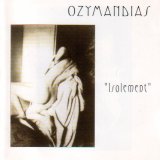
Sonic Seducer
Hinter Ozymandias verbirgt sich der Schweizer Pianist Christophe
Terrettaz. Damit ist eigentlich schon viel gesagt, die Musik
dieses Albums basiert nämlich ausschließlich auf einem
(akustischen) Piano. All diejenigen, die auf moderne klassische
Musik stehen, werden von den elf Kompositionen des Christophe
Terrettaz begeistert sein, aber auch alle anderen, halbwegs
toleranten Musikliebhabern kann diese CD, die richtige Stimmung
vorausgesetzt, durchaus empfohlen werden. Die Musik ist verspielt,
aber ziemlich depressiv, die Assoziation mit kalten Herbst- /
Winterabenden paßt hervorragend als Beschreibung der Atmosphäre,
weswegen es mich auch etwas erstaunt, daß als Release Date der
1.Juli angegeben wurde. Man merkt sofort, daß Herr Terrattaz ein
hervorragender Komponist und Musiker ist, auch die
Aufnahmequalität ist sehr gut. “Isolement”” ist somit ein Album
geworden, das aufgrund seines hohen musikalischen Niveaus und
fernab von allen Trends auch in 20 Jahren noch eine Perle in jeder
CD-Sammlung darstellen wird.
Orkus
"...Würde
man mich nach etwas Ähnlichem fragen, würde
mir spontan jener unvergleichliche erste Satz aus VAN BEETHOVENs
"Mondschein-Sonate" einfallen."
Darkmind
"...Dann
ist
sie der Ruhepol, den jeder von Zeit zu Zeit in dieser hektischen Zeit
braucht. Leider kann ich nicht von mir behaupten, ein Fachmann für
klassische Musik zu sein - trotzdem ist ISOLEMENT für mich ein kleines
Meisterwerk, das ich nicht mehr missen möchte."
Astan
"....Eine melancholisch, wehmütige Musik, gespielt mit sehr viel Gefühl
und hoher Virtuosität. Meine absolute Lieblingsplatte für die kommende
Jahreszeit, diese CD scheint wie extra für Herbst und Winter
komponiert. Etwas warmes zu trinken, den Blick nach draussen in die
Dunkelheit der kalten Jahreszeit. Eine Kerze brennt und meine Liebste
bei mir. Scahde dass ich kein Kaminfeuer habe. Ein zeitloses
Meisterwerk für Leute die dem klassisch - melancholischem Piano
verfallen sind. Wer diese CD einmal gehört hat will mehr davon, und
mehr davon und mehr davon und......"
|